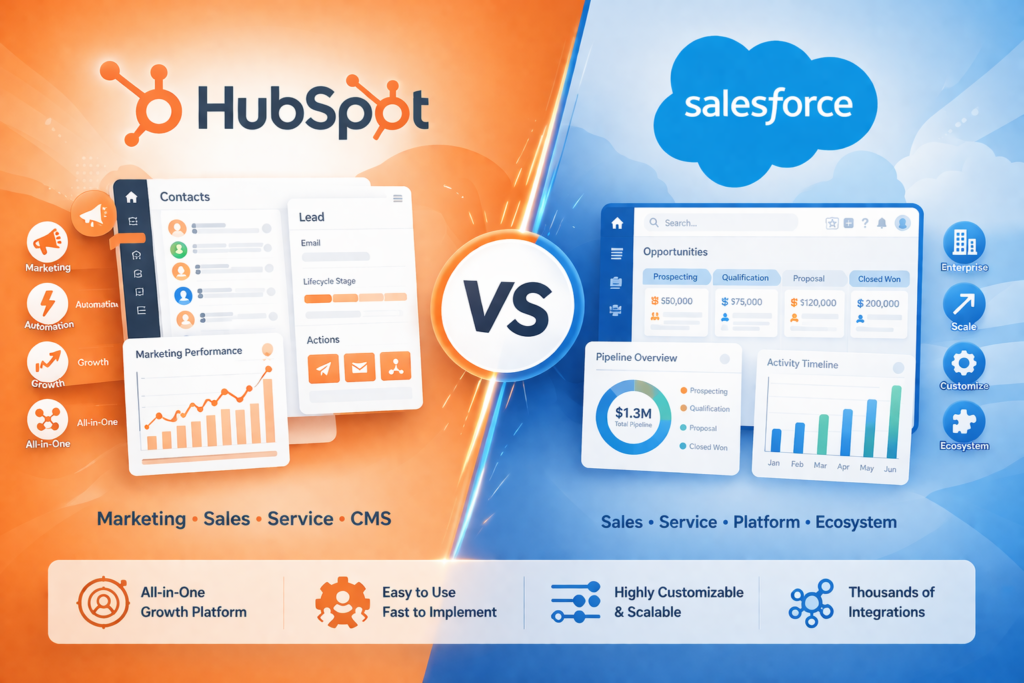

The hubspot salesforce partner vs end user classification criteria can feel confusing at first, especially if you are trying to understand where your business fits in the CRM world.
A lot of people assume the difference is only technical. In reality, it affects how you work, what access you get, and sometimes even how you grow your business.
If you are a consultant, agency owner, SaaS blogger, or someone exploring SaaS tools for startups, this distinction matters more than you may think.
One role is built around serving clients and building relationships inside the ecosystem. The other is simply about using the platform to run your own business.
That difference changes everything.
In this guide, I will break down the partner vs end user classification in a simple way, compare HubSpot and Salesforce, and show you how to tell which category fits your situation.
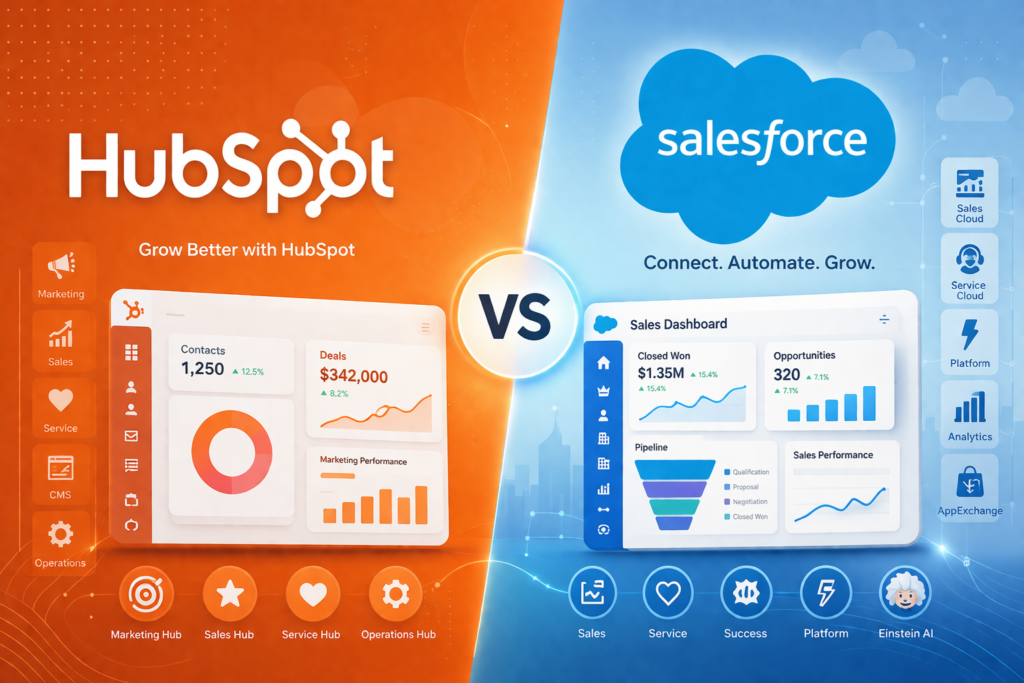
What Partner vs End User Classification Really Means
Before getting into HubSpot and Salesforce separately, it helps to understand the basic idea.
A partner is usually a business or professional that works with the CRM platform as part of a service offering. That could mean implementing the tool for clients, reselling services, managing accounts on behalf of others, or building solutions around the platform.
An end user is different. This is the company or person using the CRM for their own internal operations. They are not selling the platform or building services around it. They are simply using it to manage sales, marketing, support, or customer relationships.
That sounds simple, but in practice, people mix the two up all the time.
A digital agency using HubSpot to manage five client accounts is not the same as a retail business using HubSpot for its own sales team. A Salesforce consultant building custom workflows for businesses is not the same as a company tracking leads in its own CRM.
The use case matters.
Why This Classification Matters So Much
This is not just a naming issue. The classification can affect your access, responsibilities, and opportunities.
For example, being recognized as a partner can open the door to:
- Partner programs
- Certifications
- Commissions or referral income
- Training and support resources
- Marketing materials and co-selling opportunities
Being an end user usually means:
- Simpler access
- Internal use only
- No partner commissions
- Fewer platform obligations
If you are trying to monetize CRM-related content, build a service business, or join affiliate and partner programs, this matters even more. It helps you position yourself correctly and avoid confusion later.
If you want to build authority around software and SaaS tools, it also helps to understand where CRM partner programs fit into the bigger picture. You can link this naturally to your broader SaaS content, such as your SaaS tools for startups guide
.
HubSpot Salesforce Partner vs End User Classification Criteria Explained
Now let’s look at the two platforms separately.
HubSpot Classification Criteria
HubSpot is usually easier to understand because its ecosystem is built around clear roles.
HubSpot Partner
A HubSpot partner is typically a business that helps other companies use HubSpot. That can include:
- Marketing agencies
- CRM consultants
- Implementation specialists
- Freelancers offering HubSpot services
- RevOps teams supporting multiple clients
HubSpot’s partner ecosystem is designed for people who help others grow inside the platform. If your work involves setting up HubSpot accounts, running campaigns, optimizing pipelines, or providing strategic support, you are much closer to partner territory.
HubSpot’s Solutions Partner Program is built around this idea.
HubSpot End User
An end user in HubSpot is a business using the platform for its own team.
That usually means:
- One company
- One internal sales/marketing system
- No reselling
- No client management inside the CRM
A startup using HubSpot to track leads and automate email follow-ups is an end user. A small business using it to manage its own pipeline is also an end user.
Key HubSpot Classification Signals
HubSpot tends to look at:
- Whether you serve clients
- Whether you provide implementation or consulting services
- Whether you are part of the partner ecosystem
- Whether your business is internal or client-facing
If your business is built around helping other businesses succeed with HubSpot, you are likely a partner. If you are using the CRM just to run your own company, you are an end user.
Salesforce Classification Criteria
Salesforce is similar in concept, but more complex in execution.
Salesforce Partner
A Salesforce partner is usually part of the broader Salesforce ecosystem. This can include:
- Consulting partners
- AppExchange partners
- Resellers
- Implementation firms
- Developers building products or integrations
Salesforce’s partner network is large and highly structured. Its partner program
is built for companies that extend Salesforce’s value for other businesses.
Salesforce End User
A Salesforce end user is a company that uses Salesforce internally.
That means:
- Your team uses the CRM
- You manage your own data
- You are not reselling or implementing Salesforce for other organizations
A sales team inside a company, for example, is almost always an end user.
Key Salesforce Classification Signals
Salesforce tends to look at:
- Your role in the ecosystem
- Whether you support clients
- Whether you build or sell solutions
- Whether you are part of an official partner track
- Your licensing and support structure
Salesforce is more customizable than many platforms, so its partner versus end user line can feel more technical. Still, the basic distinction remains the same: are you using it for your own business, or for others?
HubSpot vs Salesforce: Side-by-Side Comparison
Here is a simple comparison that makes the difference easier to see.
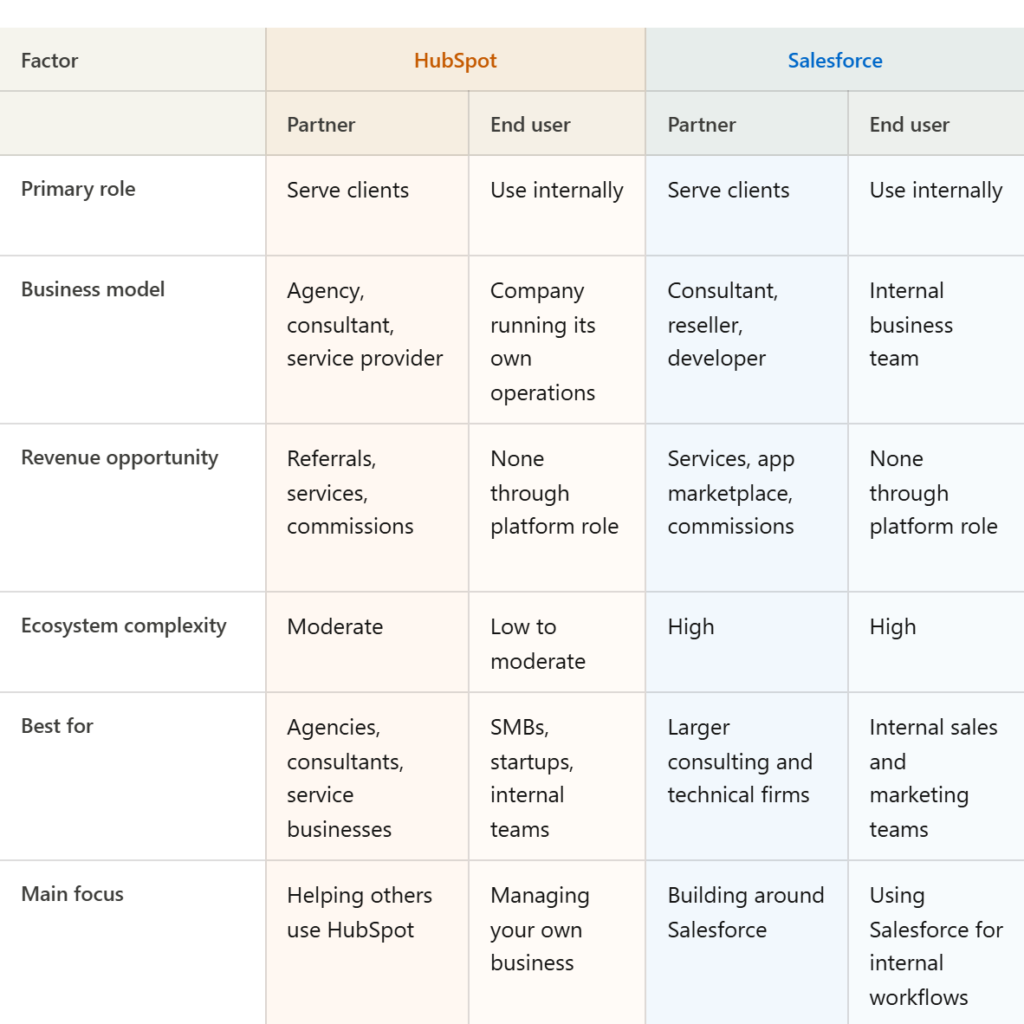
This table shows the core difference pretty clearly.
HubSpot is usually more approachable. Salesforce is usually more powerful, but also more demanding. In both cases, the classification is not about what features you click. It is about what role your business plays in the ecosystem.
How to Know Which One You Are
A lot of people get stuck here, but the answer is usually easier than they expect.
Ask yourself these questions:
Are you managing your own company only?
If yes, you are probably an end user.
Are you managing CRM systems for clients?
If yes, you are probably a partner.
Are you reselling, implementing, or consulting around the platform?
That points toward partner status.
Are you just trying to run sales, marketing, or customer support?
That points toward end user status.
Are you part of an official partner program?
If yes, then your classification is likely partner-based.
This is why understanding the hubspot salesforce partner vs end user classification criteria matters. It keeps you from choosing the wrong path and helps you present your business correctly.
Common Mistakes People Make
People often overcomplicate this.
One common mistake is assuming that using a CRM at a high level automatically makes you a partner. It does not.
Another mistake is assuming that because you are a freelancer, you are automatically an end user. That is not always true either. If you offer CRM services to clients, you may be functioning as a partner.
A third mistake is ignoring the business model behind the tool usage. The platform cares less about your opinion of the software and more about how you interact with the ecosystem.
That is the part many people miss.
Why This Matters for SaaS, Affiliate, and PartnerStack Strategy
If you run a blog or content site, this classification can help shape your entire content and monetization strategy.
For example:
- If you write about CRM reviews, you can target partner program keywords.
- If you write about business software for internal teams, you can target end-user intent.
- If you write about agency tools or implementation workflows, you can position yourself closer to partner language.
This is especially useful if you want to work with SaaS affiliate and partner platforms. The better you understand how businesses are classified, the easier it is to choose the right offers, the right content angle, and the right audience.
That is why many successful SaaS bloggers build content around comparisons, reviews, use cases, and partner-friendly topics instead of random general posts.
Key Insights to Take Away
The easiest way to remember the difference is this:
A partner helps other people use the CRM.
An end user uses the CRM for their own business.
That is the core idea.
HubSpot is usually easier and more accessible. Salesforce is usually deeper and more technical. Both systems have strong partner ecosystems, but the classification logic stays fairly consistent.
If you are serving clients, building around the platform, or earning from implementation or referrals, you are in partner territory.
If you are simply managing your own internal workflows, you are an end user.
Conclusion
The hubspot salesforce partner vs end user classification criteria may sound like a niche topic, but it matters a lot once you start working seriously with CRM platforms.
The difference comes down to role and intent. Are you using the platform for your own business, or are you helping others use it? That single question usually tells you where you belong.
HubSpot is generally simpler and easier to enter. Salesforce is more complex, more customizable, and more demanding. But in both cases, the partner versus end user distinction shapes how the ecosystem works.
If you understand that early, you can make better decisions for your business, your content strategy, and your long-term growth.
FAQ
What is the difference between a partner and an end user in HubSpot?
A partner helps other businesses use HubSpot, while an end user uses HubSpot for internal business operations.
What is the difference between a partner and an end user in Salesforce?
A partner works within the Salesforce ecosystem to serve clients or build solutions, while an end user uses Salesforce for their own company.
Can one business be both a partner and an end user?
Yes. Some businesses use the platform internally and also provide services to clients, which can place them in both roles.
Why does classification matter in CRM platforms?
It affects program access, support, pricing structures, referral opportunities, and how the platform defines your role.
Is HubSpot easier to classify than Salesforce?
Usually yes. HubSpot tends to have a simpler partner ecosystem, while Salesforce is more technical and more complex.
Do I need to be a partner to use HubSpot or Salesforce?
No. Most businesses are end users and use the platforms only for their own internal operations.
How do partner programs help businesses?
Partner programs can provide training, commissions, co-marketing opportunities, certifications, and deeper ecosystem access.